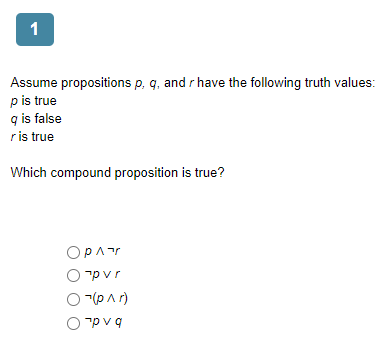
1)p(true) and not r(false) – true and false make false
2) not p or r – false or true making true?
3) not (p and r) – not ( true and true) = false
4) not p or q – false or false = false
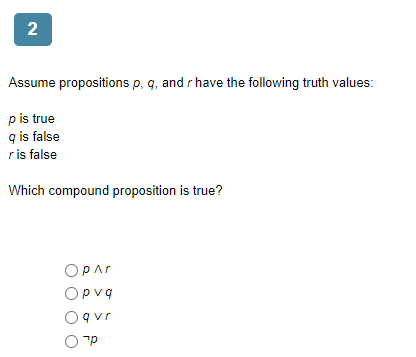
- true and false = false
2) true or false = true
3)false or false = false
4) not true = false
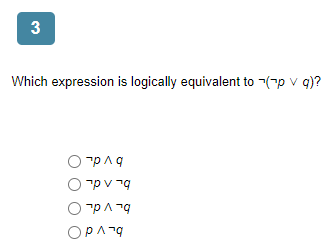
with de morgans law if everything is opposite within the parentheses then it would be p and not q which is D
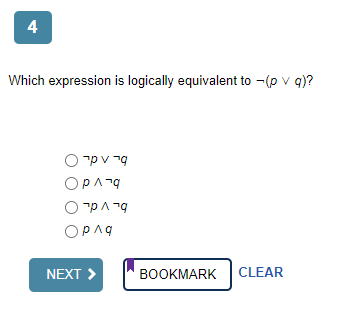
same as the last one – it would be not p and not q which is C
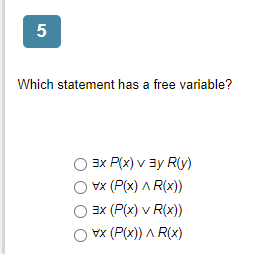
a free variable because the variable is free to take on any value in the domain so we need to find one that doesn’t have any existential and has all so I believe it would be B because it encompasses all with for all
Actually it would be D because the R(x) exists outside of the for all p(x) making it a free variable
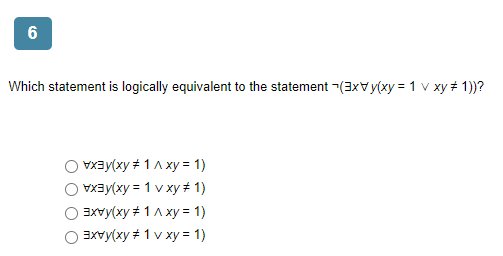
So I’m thinking with this one since it’s not then it would be for allx and there exists y xy = 1 and not equal to 1 so I believe it would be A
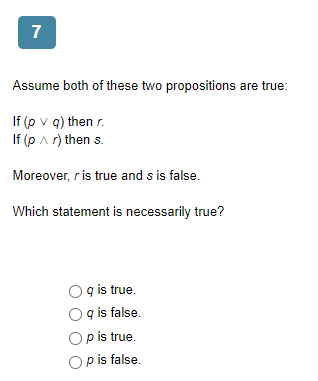
If not P and R then S it would be not p or not r then S so then it would be not r is false so not p is true making p false. so D

this logically seems like P and Not Q so D I suppose
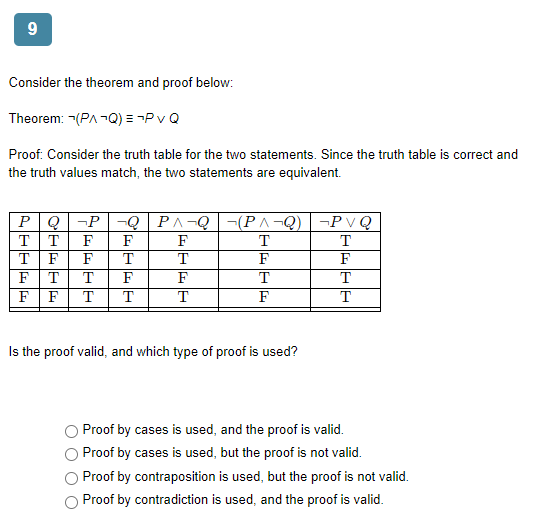
Proof by case but the truth table isn’t valid so B
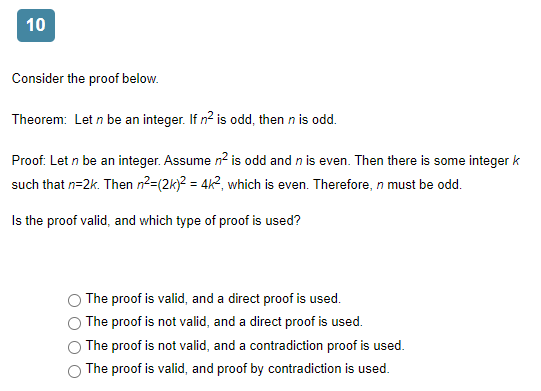
It seems like the proof is valid and a proof by contradiction is used but not sure so guessing D?
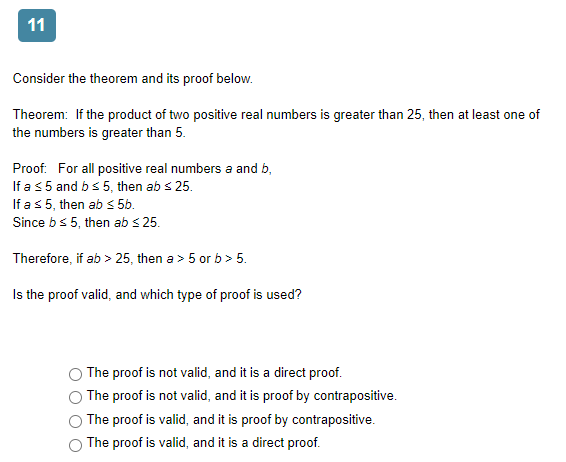
This definitely appears to be a contrapositive proof and it doesn’t seem to be valid so I’d guess B
it is indeed contrapositive but the proof is valid so it’s C
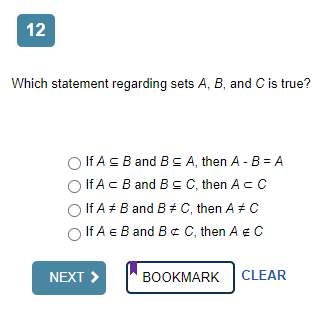
not A because they’re both subsets of eachother, For B I think that’s true because if a contains elements of B but isn’t all of them but actually maybe not because B could have different numbers in it that aren’t in C honestly B seems like the most logical but unsure of why. basically taking them logically will make it make sense
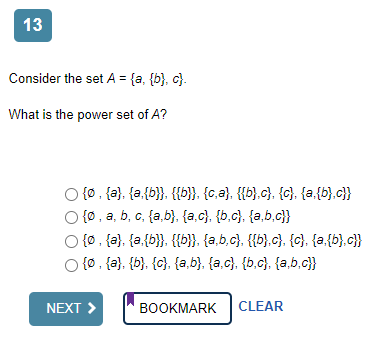
It’s c in this case because there can’t be any instances of just b it needs to be {b}
This one would actually be A because you need to only have b within the brackets
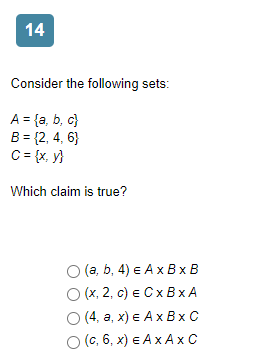
I believe the answer would be B because it aligns with the sequence of x with the commas
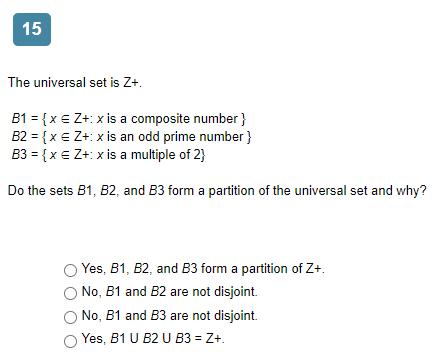
I believe it would be A because logically all numbers seem to be within positive integers. not sure if it equals z+ because they are all over the place. need to look that up
I believe it should be D but lets check – no It’s C B1 and B3 are not disjoint – and that is because to make a proper partition, you need to have all elements and each partition can only have the elements in it one time – B1 and B3 have repeating numbers because all multiples of 2 are composite numbers.
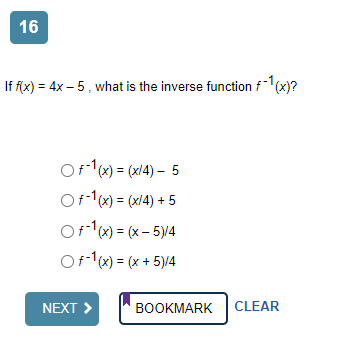
That seems just to be D by using algebra
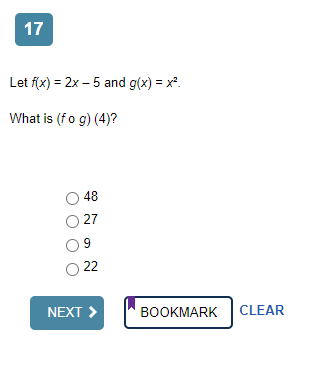
That would be b because 2(4^2)-5 = 27
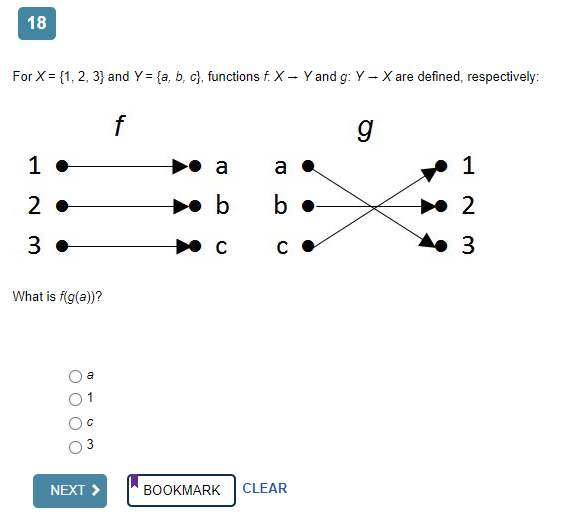
That would be C because g of a is 3 and f of 3 is c
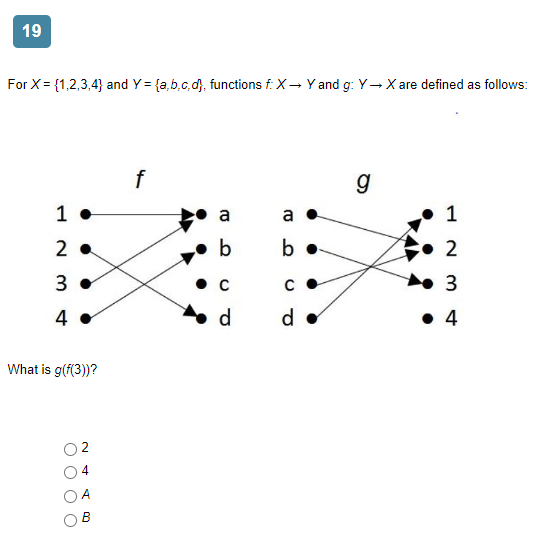
That would be 2 because f of 3 is a and g of a is 2 which is A
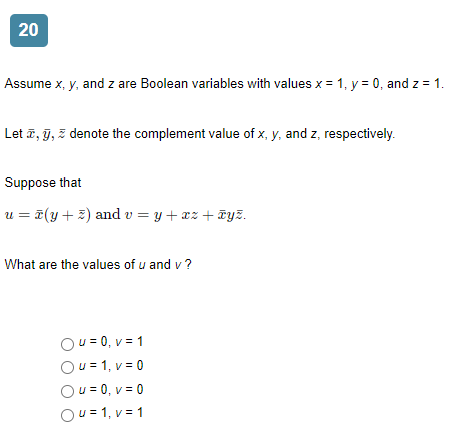
u = 0(0+0) v = 0 + 1 + 0 so is looks like A would be the answer
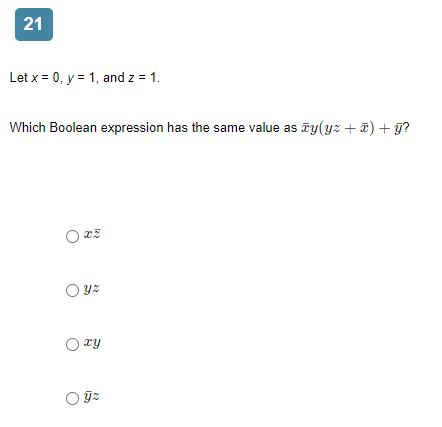
1*1(1*1 + 1) +0=2? I suppose it would be B
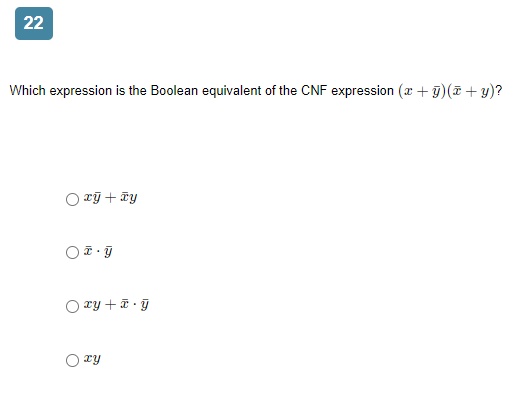
It is basically like taking de morgans rule on it so it’d be not x times y plus x times not y so it’d be A
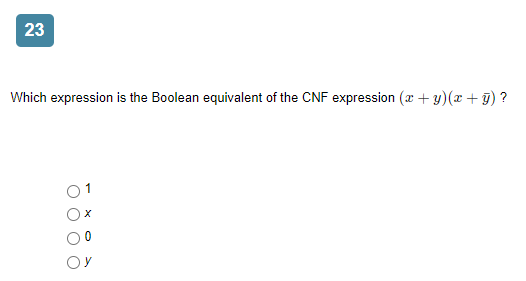
I’m guessing X because the ys cancel out? so B
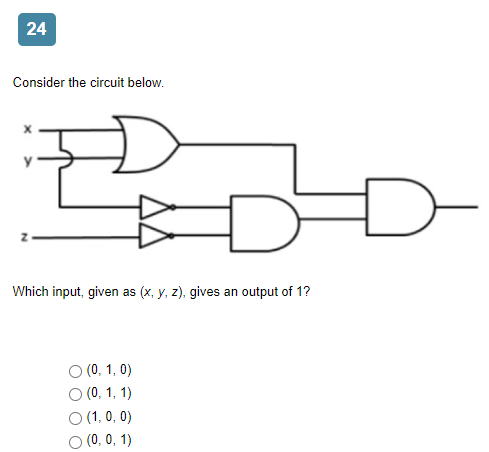
After plotting the logic gates 0,1,0 is equal to 1 so it is A
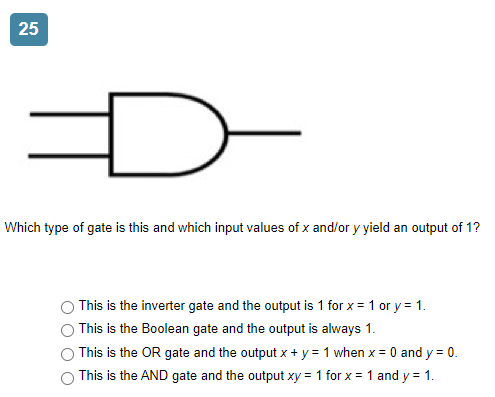
Per the gate logic piece it’s an AND gate and xy= 1 so it is D
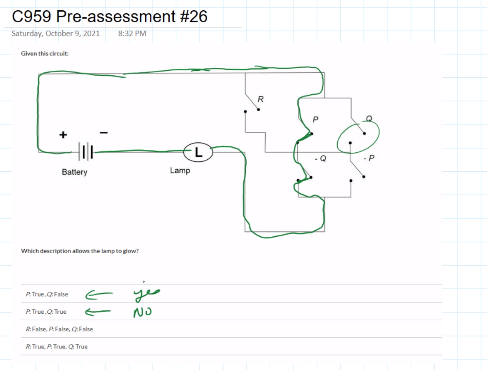
From Bob’s video – it is A because that allows the circuits to fully travel
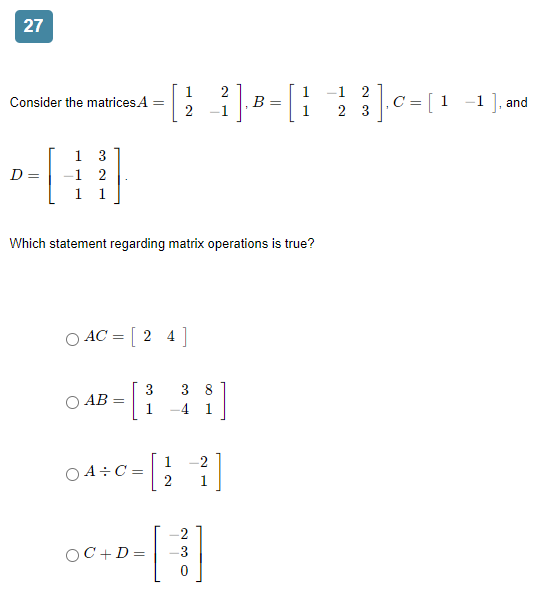
a) AC = (2×2) * (1×2) >> not this because it doesn’t match sizes
b) AB = (2×2) * (2×3) by default!
c) A/C = A * C[-1] = I don’t think C has an inverse so not happening?
d) orders are different so adding isn’t happening
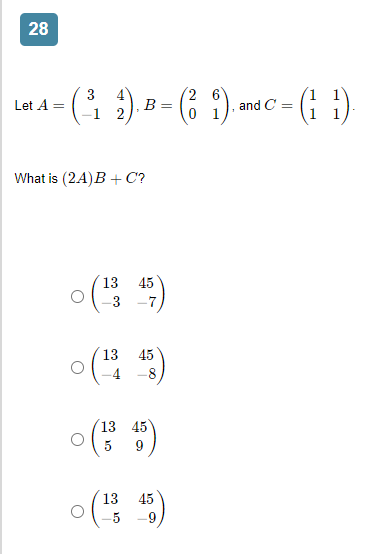
34 x2 = 6 8 now take the product and add and you get 13 45 which is A
-12 = -2 4 -3 -7
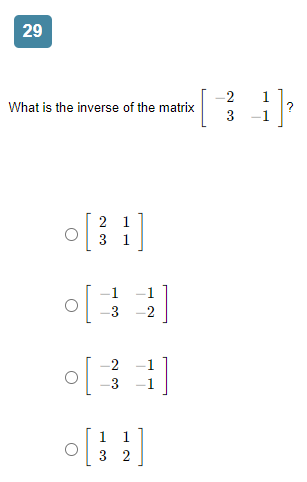
one over adjegate so it ends up just being the determinate since the adjegate is 1/1 which would be B
Did it on paper with the guide and it was obviously A
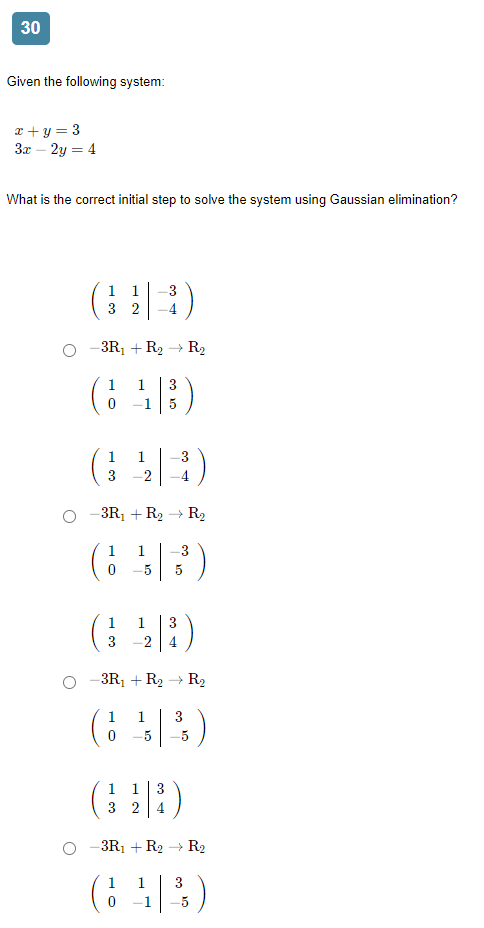
I guess it’d be C?
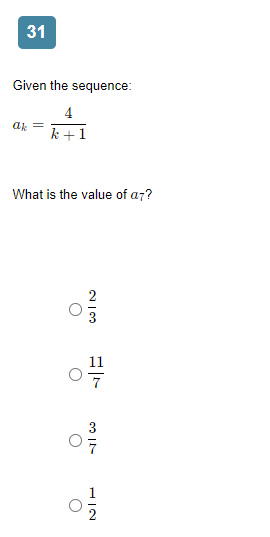
I suppose it’d be 1/2 D because it’s 4/(7+1)
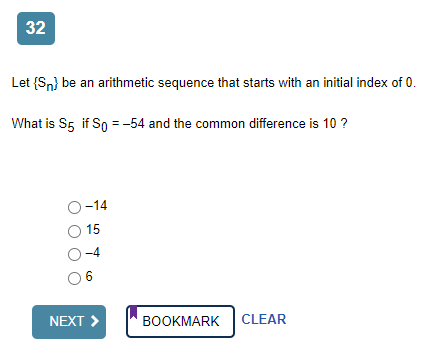
I’d guess -4 because it goes down by 10 each time? So C I guess?
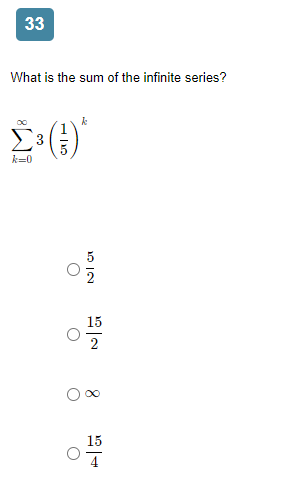
15/4 because it starts at 0 dummy Than
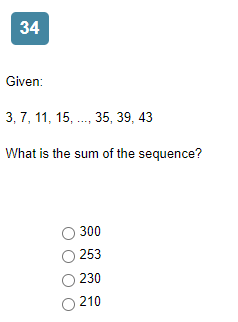
This would be 253 and B because of the sum of sequence rule
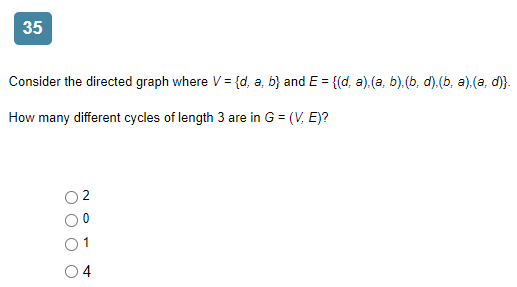
Looks like 3 so maybe 4? go with D I suppose
Corrected from Bob: It was 1 because there is one cycle of length 3 when you draw it out
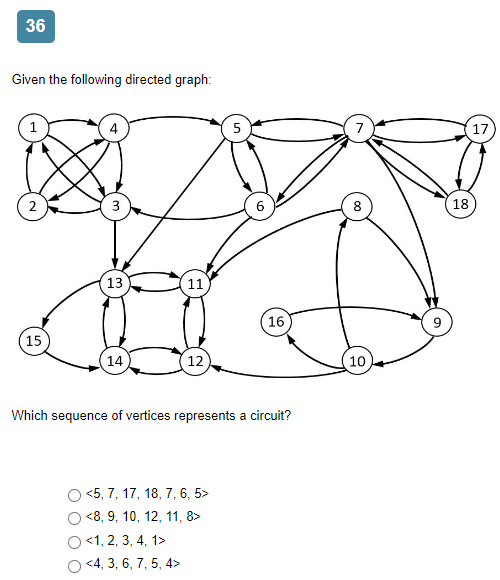
That would be B because you follow the arrows through the circuit
If I would’ve paid attention to the arrows it would have been obvious it was A
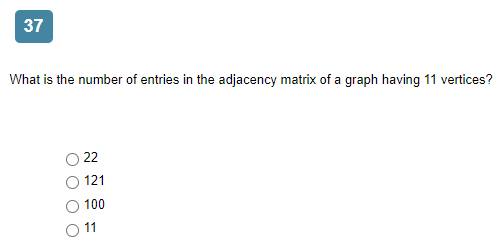
Would be 121 likely because it’s 11 * 11 but you could also cut it in half to make 60 maybe? But we’ll go with B
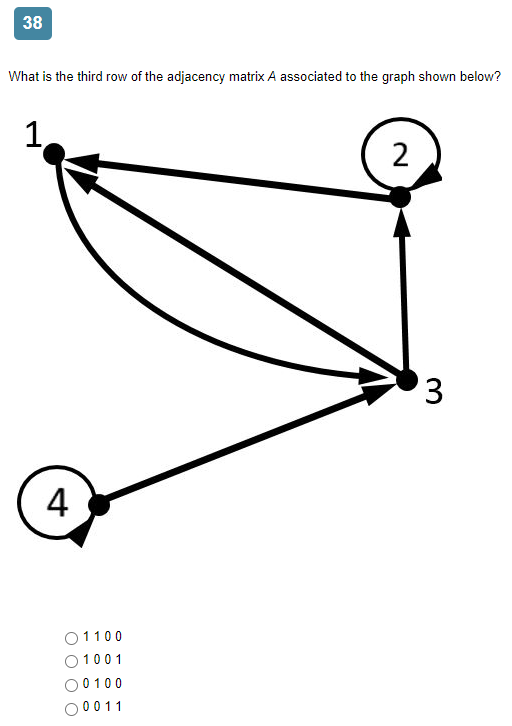
Looks like it’d be 1100 so it’d be A
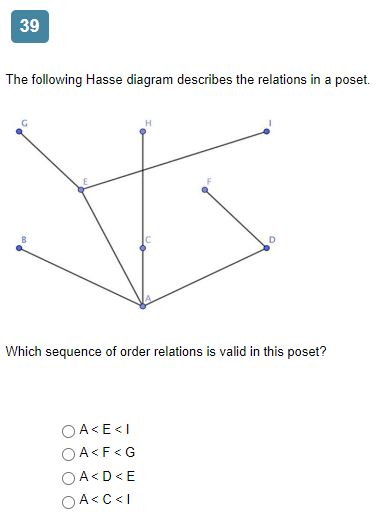
I’d say A because it follows the line up
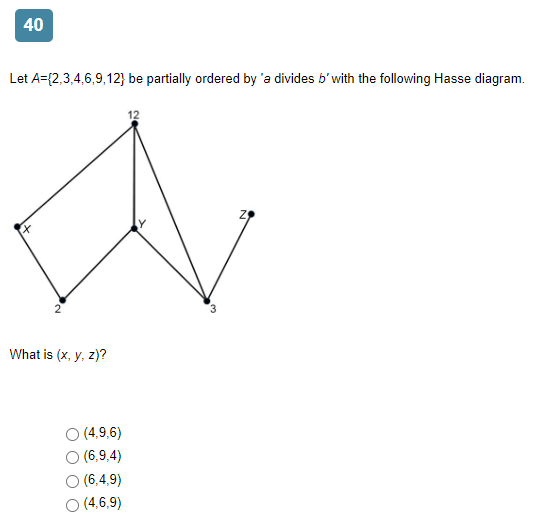
I’d say D, 4 6 9 because 2 and 3 need to have the 6 and 9 doesn’t go anywhere
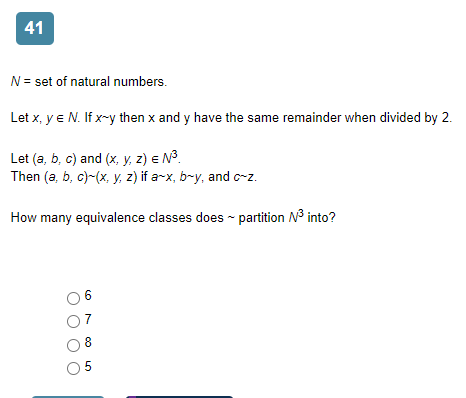
No idea –
Answer from Bob: D 8 because 2x2x2
Analyze the first dimension and scale up
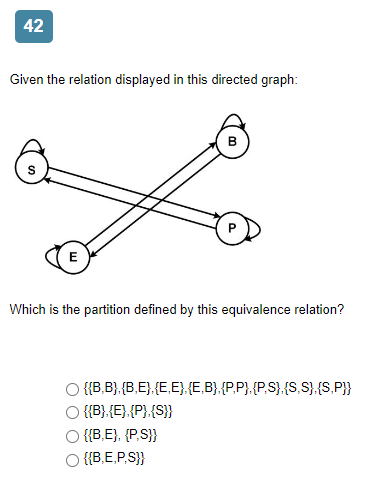
I’m guessing It’s gotta be C but I need to figure out why – guessing it’s because the two go back and forth from eachother.
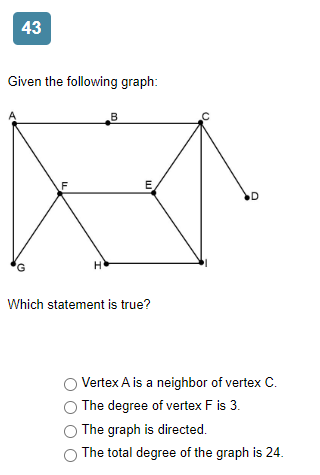
I’m going to go with D because each of the possible paths added up for every letter is around 24
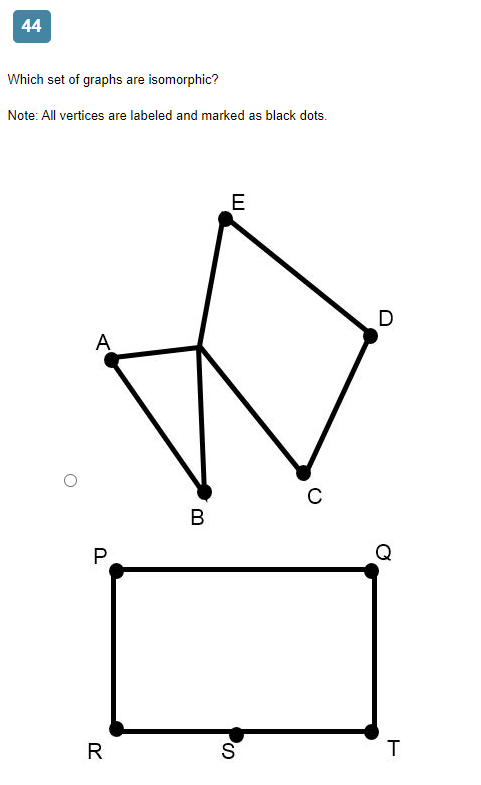
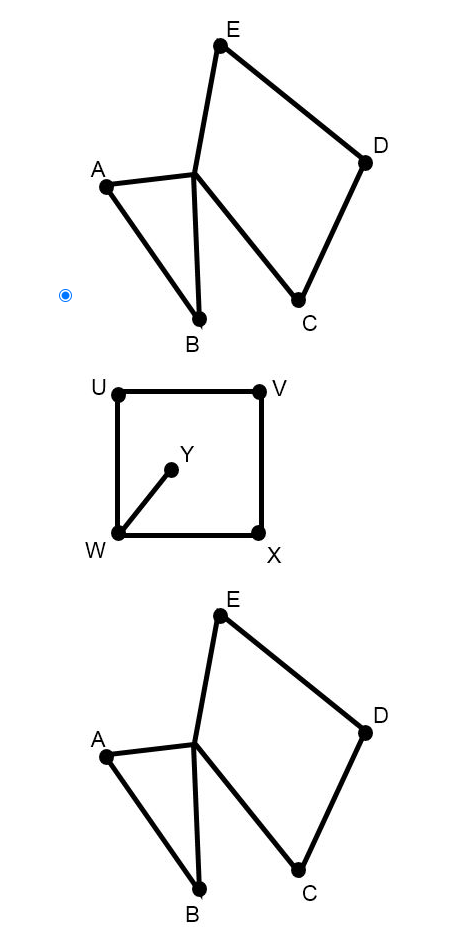
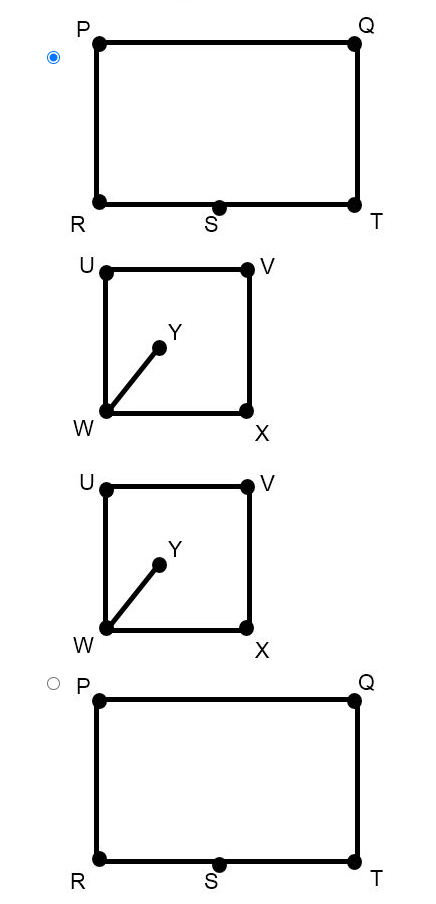
I have no fricking clue – can’t even tell how they’re bundled need to check this out on the actual test but they just need to have the same basic structure of movement on each edge, just the vertices are in a different spot
Correct answer from bob: Imagine rubber bands attached to the connections – count the number of edges and vertices – if you move it around will it match
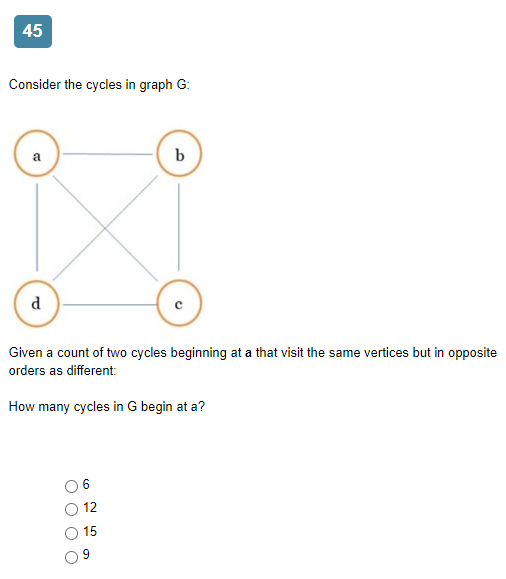
This is 12 because you have to see how many times you can go through and multiply them 3*2*2 so B
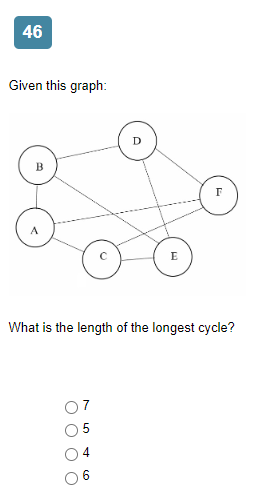
Going with B because it seems to be 5 from C to C
On second though it looks like F-D-E-B-A-C-F so I can see D there.
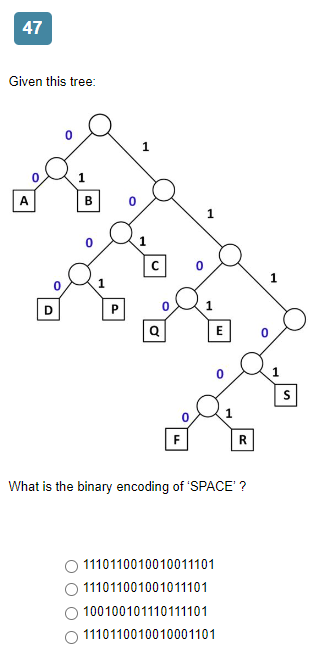
11101 1001 00 101 1101 So it is B
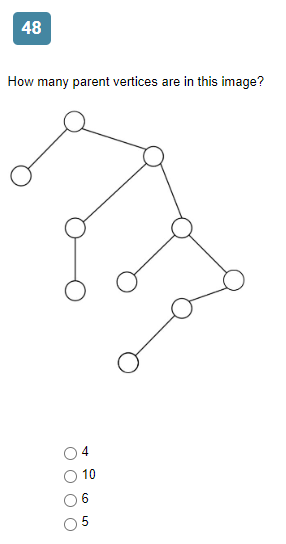
Going with 6 so C
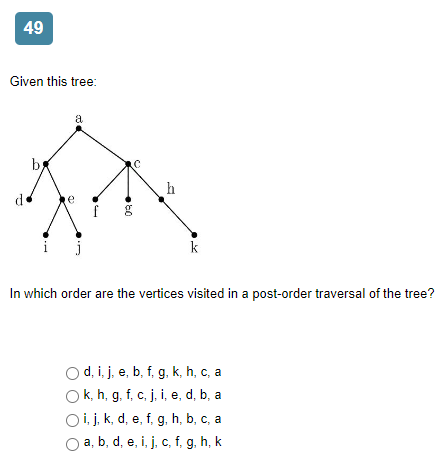
d,i,j,e,b,f,g,k,h,c,a so it is A
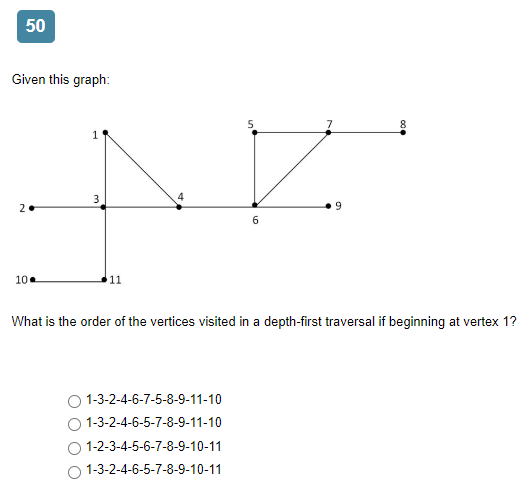
132 46578 9 1011
D looks to be the most correct path
Correct Answer from Bob: lowest number first and then up from there back until you can’t go forward anymore then go to from the lowest number to the next connection and continue That would be B