In this unit we will go over the following:
- Define information technology (IT).
- Explain the purpose of an IT department in an organization.
- Identify major IT roles and functions.
- Explain the importance of ensuring that data and information systems support business goals and processes.
- Differentiate between information and data.
- Define information system.
- Describe characteristics of valuable data.
- Differentiate between input, output, and storage.
Information technology (IT) is the technology used to create, maintain, and make information available. IT manages and supports the technologies needed to develop, maintain, and use computer hardware and software, along with network connectivity and performance. Further, IT is responsible for the storage, processing, and distribution of information. These are just a few examples of how information technology affects nearly every area of business; IT provides the information backbone of practically any organization.
Systems
A system is a collection of elements that interact to achieve a common goal. IT as a system includes the hardware, the software, the networking elements (maintained by IT professionals), and the people who use them. Moreover, every component could also be viewed as a system.
IT Functions
- User Support
- Analyzing and troubleshooting user issues and implementing solutions
- Data and Info Management
- build systems to enable storage, retrieval, analysis, and use of organization data and information with an eye on disaster recovery and business continuity to mitigate the high costs of losing data
- Networks
- Networking technologies rely on hardware and software to connect computer systems and data repositories, whether they are a few feet apart from each other in a single room or thousands of miles apart on separate continents.
- Systems Integration
- Different systems used by an organization often need to work together, perhaps even retrieving data from each other.
Core Components of IT Software
- Software Development
- Software systems implement various algorithms that transform data from one form into another, perform calculations, manipulate files, or complete other tasks that may be repetitive, time consuming, or dangerous to an employee
- Business Analysis
- Organizations analyze their processes, then assess current and anticipated needs for gaps that technology can fill.
- Security
- Organizations aim to put secure systems in place to identify threats and prevent incidents that compromise the organization’s data or disrupt the business.
Business of IT
- Web Development
- Websites can generally be classified as either intranet(internal), internet(public), or extranet(guarded public).
- Business Intelligence
- The data, when appropriately organized and analyzed, may tell compelling stories about the current state of the organization or the industry as a whole, its customers’ needs and wants, or specific trends that support informed decision-making
- Project Management
- The maintenance of an organization’s IT infrastructure includes various projects to ensure continuous functionality and implement improvements or technology changes within the general organizational IT strategy
- Outsourcing Services
- Smaller organizations cannot always employ a full range of IT professionals to support their systems. Instead, consultants are frequently brought in for technical support.
IT As A Discipline
- Computing Disciplines
- It includes tasks as varied as designing and creating hardware and software, establishing networks, managing information, building chatbots to exhibit human-like behavior, and sequencing DNA
- five of the most commonly recognized computing disciplines include computer engineering, computer science, software engineering, information systems, and information technology.
Computer Engineering
- The Computer Engineering Problem Space
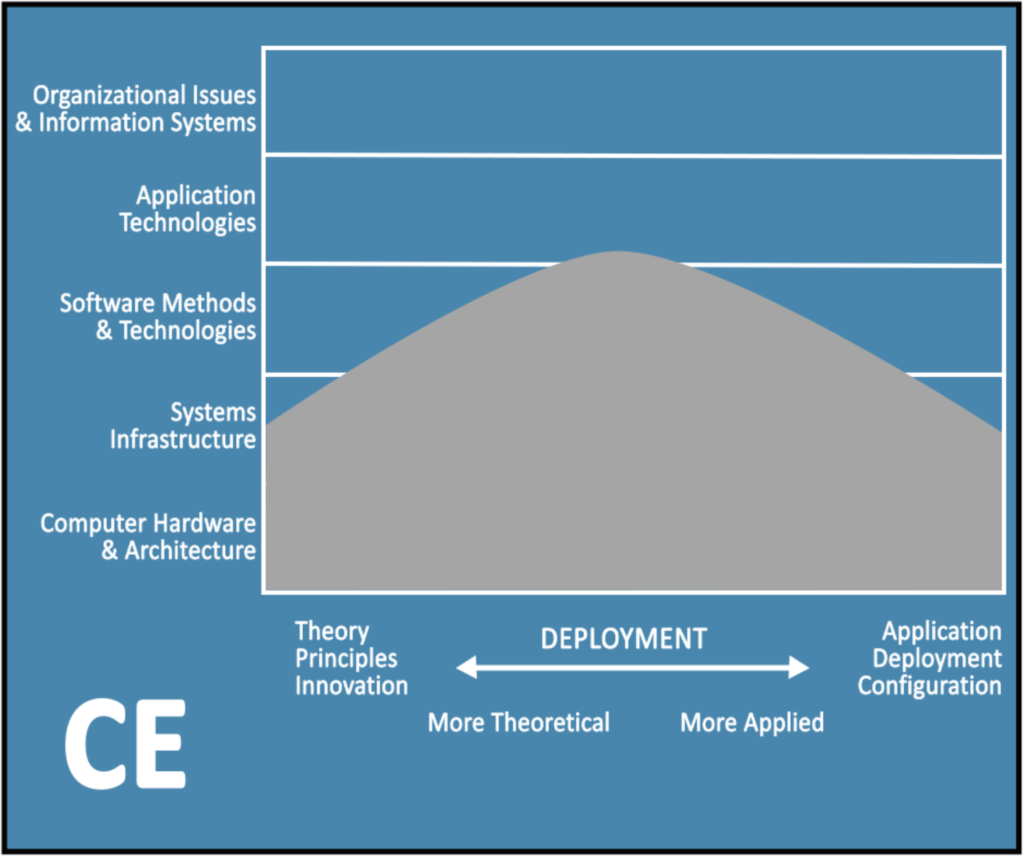
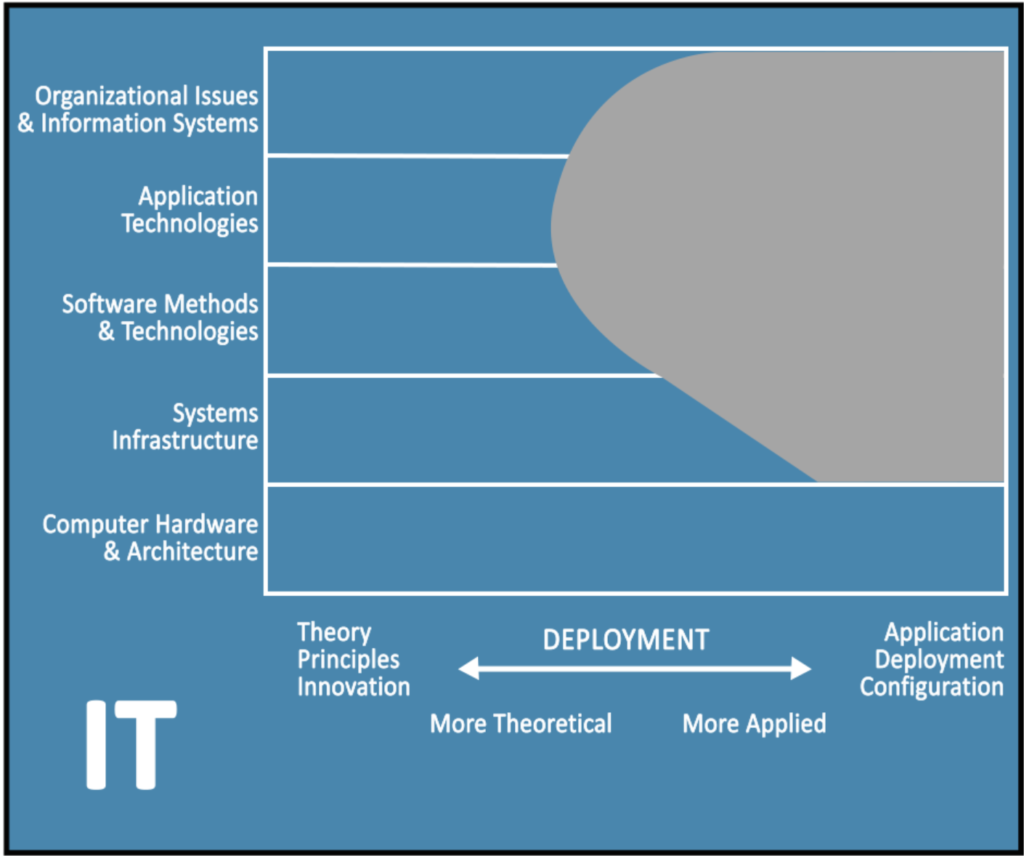
- The graph that follows outlines computer system issues addressed by various computer engineering disciplines. The horizontal axis ranges from theory, principles, and innovation on the left to application, deployment, and configuration on the right. The vertical axis represents hardware and architecture on the bottom, and organizational issues, needs, and systems at the top.
Computer Science
The Computer Science Problem Space
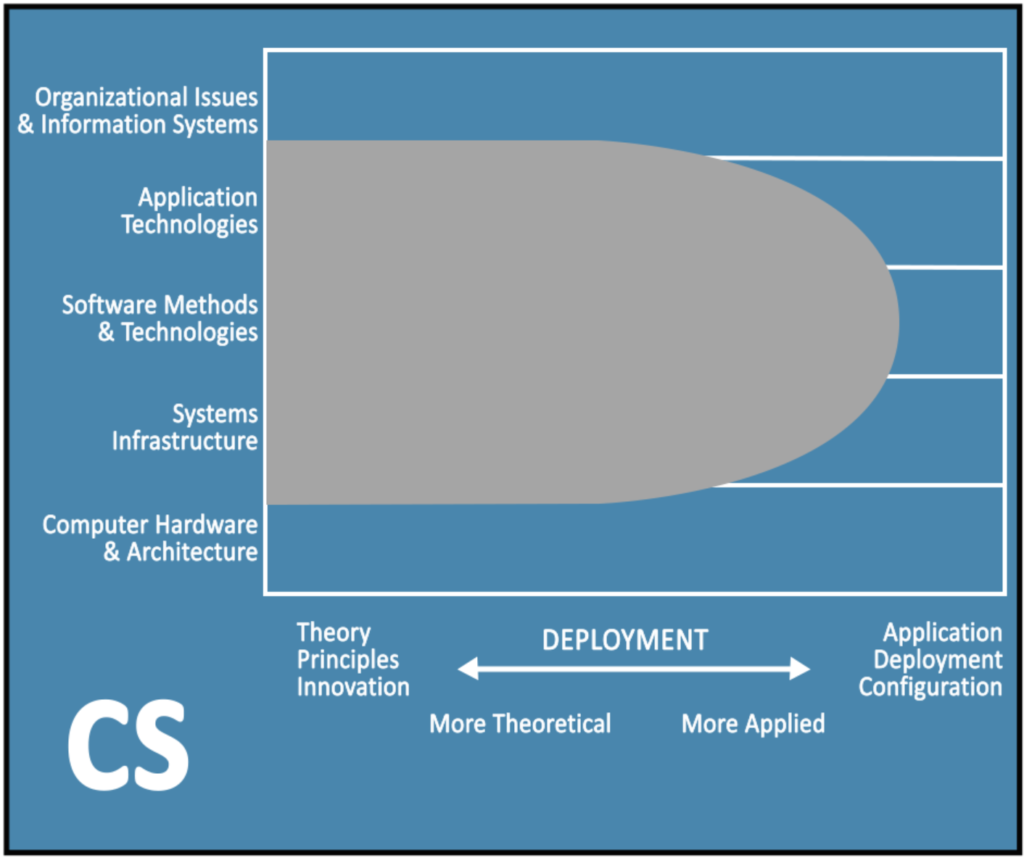
- Computer science (CS) addresses the design and implementation of software with an emphasis on developing effective ways to solve computing problems and creating new ways to use computers. It encompasses a range of computing-related tasks such as robotics, artificial intelligence, augmented reality, and algorithms designed to solve problems.
Software Engineering
The Software Engineering Problem Space
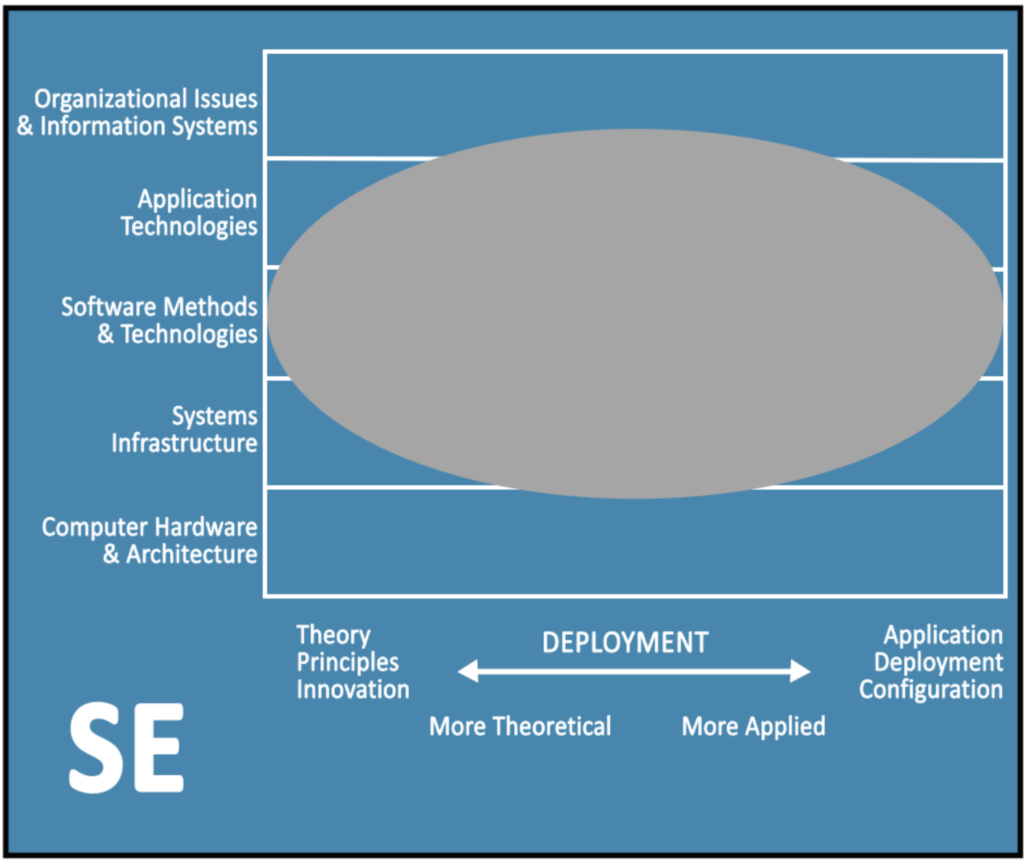
- Large software systems are constructed across enterprises to meet business requirements and support business-critical activities. Software engineering (SE) focuses on the development and maintenance of reliable and efficient software systems.
Information Systems
The Information Systems Problem Space
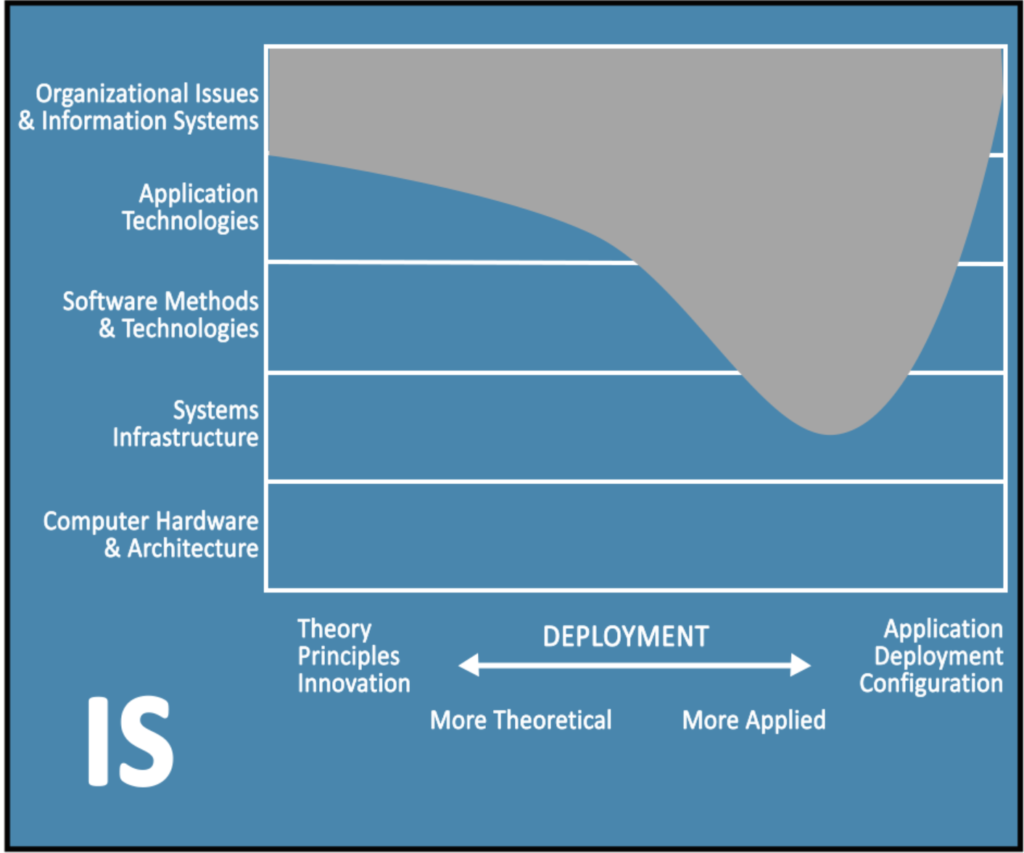
- The focus of information systems (IS) is to integrate IT solutions meant to meet organizational business goals. This computing discipline addresses systems that generate, process, and distribute information and support organizational communication and collaboration, their design, and their implementation.
Information Technology
The Information Technology Problem Space
- Information technology (IT) focuses more on the technology supporting information systems in an organization rather than the information residing on the systems or being communicated with them. In this sense, IT responds to the practical needs of the organization, including reliable and secure solutions that are appropriately maintained, updated, and replaced.
History of the IT Timeline (loose notes)
- 1948 – Manchester Mark 1 – one of the first stored program computers – first program searched for Mersenne primes
- 1954 – IGM made mass produced computers Model 650 was the first – 1956 a keyboard was introduced instead of punch cards and tape input
- 1958 – SAGE connects 23 computer sites to detect soviet bombers
- 1960 – DEC PDP-1 system $120,000 mainly for universities – first video game and music engagement
- 1968 – Data General with Nova minicomputer. 32KB memory sold for 9900 popular through the 70s
- 1971 – Intel 4004 processor and Xerox printer
- 1974 – Intel 8080 processor 64KB
- 1976-8 – Wozniak Apple 1 – Apple II sold – Atari Model 400 and 800 computers
- 1981 MS DOS, Sony 3.5 floppy IBM PC with MSDOS
- 1982 – CDROM with 550 MB and MS Word
- 1984-6 Apple Macintosh and Compaq portable IBM pc Compaq makes 386
- 1990 – World Wide Web and Windows 3.0
- 1992-3 JPEG standard and Mosaic first web browser
- 1994 – Compact Flash memory storage with Playstation gaming
- 1997 – IBM Deep blue chess computer wins Chess and SMS becomes the norm on the Nokia
- 2000 – First Camera Phone, USB Drives, Honda Robot
- 2001 – iTunes and 2002 xbox
- 2006 – Google added to dictionary AWS Launches cloud and google followed
- 2007 – Kindle released and iphone released and android
- 2010 – iPad, retina display, IBM Watson beats Jeopardy champ
- 2011 – Adobe Creative Cloud and Office 365 for SaaS
- 2012 – Raspberry Pi
- 2014 – Apple Pay
- 2014 – Apple Watch
- 2019 – Oculus Rift VR
IT Professionals – The Roles of the IT Professional
Video – IT Jobs by Category
- Wide range of professionals – as follows:
- Help Desk Professional
- problem with computer or file access – help troubleshoot IT related problems
- IT Admin
- Set IT policy for org – which tech, security protocols, rights and so on
- Architect
- designing big pictures – what are the goals and the strategy and direction to reach that goal
- implement guiding (Macro view)
- Devops Professional
- Brings together developers, programmers and admin to fit together as one team
- Engineer
- Implementation of the plan
- What should be server size bandwidth an tasks before handing to admins
Administration
System admin
- responsible for providing technical support for hardware and software issues end users encounter, such as log-in issues.
Network Admin
- The network administrator is responsible for designing, planning, setting up, and maintaining an organization’s network.
Database Admin
- The database administrator is responsible for installing and configuring databases. This position also fixes database errors and creates user accounts.
Security Admin
- The security administrator is responsible for installing, administering, and troubleshooting network security issues.
Web Admin
- The web administrator is responsible for troubleshooting error messages employees encounter when attempting to access their organization’s website. The web administrator is also responsible for tracking, compiling, and analyzing website usage data. This role reports security breaches to appropriate personnel.
Architect
Cloud Architect
- The cloud architect is responsible for overseeing a company’s cloud computing systems.
Network Architect
- The network architect is responsible for designing networks and monitoring traffic. This position is responsible for installing routers and modems and upgrading hardware and software that are essential for the network to function properly.
Automation Architect
- The automation architect is responsible for modernizing business processes and developing reasons or rationales for or against a process being automated.
Cybersecurity Architect
- The cybersecurity architect is responsible for designing, building, testing, and implementing security systems within an organization’s information technology network. An individual within this position requires a thorough understanding of an organization’s IT systems to anticipate possible network security breaches.
Engineering
Machine Learning Engineer
- The machine learning engineer is responsible for allowing an organization to take full control of its data. Application developers and computer programmers with data analytical skills can transition to become machine learning engineers.
Software Engineer
- Software engineers design and develop software that makes hardware and software systems work, including operating systems, database systems, and embedded systems. They need to understand hardware and software. Software engineers work with clients and colleagues to understand requirements and perform detailed technical work. Software engineers typically work in IT, electronics, or telecommunication companies in roles such as application programmers, software developers, and software architects. These jobs require attention to detail, analytical and logical thinking skills, and teamwork.
Network Engineer
- Hardware engineers, network designers, and network engineers set up, configure, maintain, and upgrade systems where data resides and that support the exchange of information, including communication systems and networks. Network engineers ensure that the security of data and information is appropriate and that companies have processes and procedures in place to enable business operations to continue in the event of a disaster.
Cloud Engineer
- Cloud software engineers, cloud security engineers, cloud system engineers, and cloud network engineers use their technical and analytical skills to help companies identify opportunities for migrating a part or all of their infrastructure to the cloud, supporting the more efficient use of resources and improving IT operations. These individuals design and set up automation, cloud storage, data centers, virtual servers, and web services with an emphasis on a particular solution’s cost, benefits to users, and security of data processing.
Analysts
Technical Support
- The technical support specialist supports, monitors, and maintains workplace technology and responds to user requests for help. Titles for technical support in an organization include helpdesk specialist and IT support specialist. These roles need a wide range of IT knowledge, problem-solving skills, and patience to help users benefit from the available technology.
Systems Analyst
- Systems analysts, product specialists, systems engineers, solutions specialists, and technical designers investigate business problems and create information systems to provide solutions. These jobs require both business and technical knowledge and rely on effective communication to understand clients’ requirements.
Data Analyst
- Organizations gather data from customers and internal operations to identify opportunities to improve business operations. Data analysts use statistical and other quantitative methods to gain insights that support the organization’s decision-making. Data scientists, data analysts, and statisticians use their analytical expertise and presentation skills to tell the stories hidden in the data.
Security Analyst
- The security analyst is responsible for monitoring an organization’s network for security breaches. The role of this specific job will continue to grow as organizations continue to encounter network attacks.
Cybersecurity Specialist
- Cybersecurity specialists work with organizations to keep their information systems secure and ensure integrity, confidentiality, and availability of data. They determine which users require access to what information, and then plan, coordinate, and implement information security solutions. They use their specialized expertise to help identify and protect against threats such as malware, phishing, viruses, denial-of-service attacks, and information warfare.
Technical Consultant
- Technical consultants, IT consultants, or IT specialists provide technical expertise by developing and implementing IT systems for external clients. Skills that are of particular importance for these roles include communication, presentation, technical and business understanding, project management, and teamwork. Consultants may work for themselves or for an organization providing third-party IT services.
Other IT Roles
Project Managers
- The project manager organizes people, time, and other resources to make sure projects meet requirements and are completed on time and within budget. To successfully manage projects from start to finish, project managers need good organization, problem-solving, and communication skills, as well as an ability to stay calm and focused under pressure.
Web Developers
- he web developer builds and maintains websites and their infrastructure. Web developers are also called web designers, web producers, and internet engineers. Their tasks range from technical to creative and include multimedia elements and the user interface. Web developers need to understand client-side, server-side, and database web technologies. In addition, web developers must have sharp analytical thinking and problem-solving skills and creativity. Generally, web developers may do some work with the interface, but developers are typically more involved with the infrastructure, such as installing web services, configuring authentication (if any), and managing database connections.
Software Tester
- The software tester is responsible for creating, documenting, and executing manually created test plans and procedures relating to system anomalies. Software testers apply attention to detail, creativity, and analytical and investigative thinking skills to prepare testing scenarios to discover issues in a system. Test analysts, software quality assurance testers, and other software testing roles try to anticipate all the ways an application or system might be used and how it could fail. They then communicate their findings to the project team to identify solutions that will mitigate the issues.
Technical Sales
- IT professionals in the role of sales or account managers identify and help clients adopt IT services or technologies. These positions require both technical knowledge and the ability to communicate solutions or services to an organization. Product knowledge, negotiation skills, interpersonal skills, and business awareness are some of the key attributes of successful IT professionals in the technical sales domain.
Module 5 – Data Information and Information Systems
Data and Information
- Data aggregates with incredible speed and in amounts that are hard to understand. With our activities and interactions, at home or at work, while taking selfies or writing emails, we all contribute to the massive aggregates of data. For this data to be useful, we must make sense of it and make connections we might not have been aware of.
The Data Pyramid
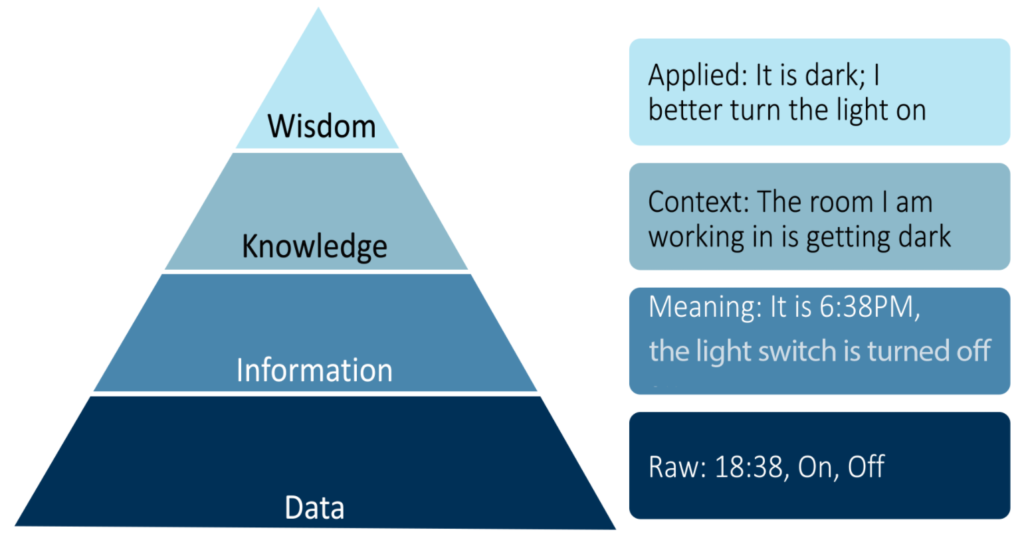
- Information is defined in terms of data, knowledge in terms of information, and wisdom in terms of knowledge. Data, given context, becomes information. Information, given meaning, becomes knowledge. Knowledge, given insights, becomes wisdom. The data pyramid is a concept that visualizes the data-information-knowledge-wisdom hierarchy
Connectedness Wisdom
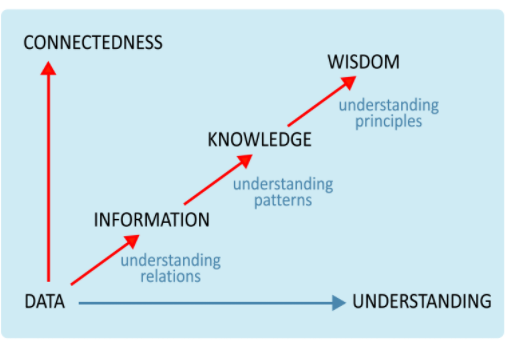
- Connectedness wisdom is essentially “the path to connected understanding” when interpreting data. It is that human element leveraging an intelligent technology component when attempting to make fact-based decisions.
Flipped Pyramid
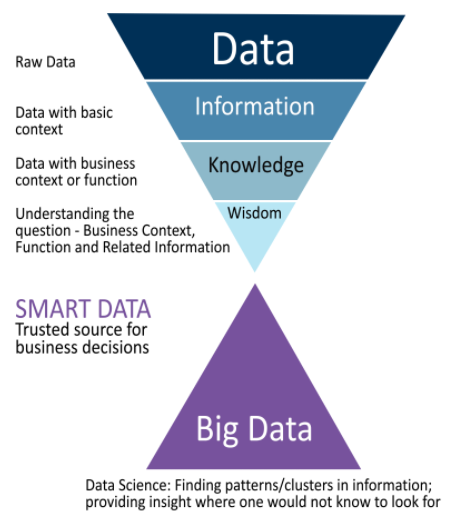
Basically taking industry data and developing it into methods of creating more revenue based on purchasing data.
Structured and Unstructured Data
- There’s a shit ton of data being raked in yet there isn’t many organizations that use that information to the fullest because much of it is unstructured data which is hard to work with.
Big Data
- Big data is estimated to grow 45% annually – new and innovative ways of doing business are redefining how companies collect and use data.
Information Systems
- synonym for computer-based information systems
Data Management
There are three core variations of cloud-based systems:
- infrastructure as a service (IaaS)
- provides access in a virtualized environment and the computing resources are composed of virtualized hardware. This includes things like network connections, virtual server space, and load balancers.
- platform as a service (PaaS)
- customers have access to a platform that supports the development and management of web applications. PaaS enables quicker development lifecycles and reduced infrastructure requirements since the majority of processing happens in the cloud rather than on local storage and processor resources.
- software as a service (SaaS)
- the software is licensed to customers with subscriptions and central hosting. Some examples include Gmail, Google Docs, and Microsoft Office 365.
Data Sources
- Data in businesses comes from various activities, including sales and marketing, finance, customer service, and relationship management.
Data Quality
Good data enables businesses to do the following:
- Analyze the current financial state of the organization in terms of net profits, revenues, cash flow, assets, and liabilities
- Increase revenues through better targeting of products and increased customer satisfaction
- Examine existing production processes to take corrective action, improve efficiency, and lower costs
- Develop new, automated processes that integrate harmoniously into existing workflows and reduce demands on labor
- Gather competitive information on product and pricing decisions to stay ahead of competitors
- Make evidence-based decisions that utilize verifiable data to maximize profits and efficiency
- Understand business value by exploiting rapid changes in information and generating insights from diverse data sources to widen the competitive differentiation gap
There are three general steps for transforming institutional knowledge into implementable data solutions: capturing, analyzing, and using.
Data Hygiene
Dirty data can be caused by things such as duplicate records, incomplete or outdated data, and mistakes introduced as data is entered, stored, and managed.
| Types of Bad Data | Description |
| Duplicate data | Two or more identical records |
| Conflicting data | The same records with differing attributes |
| Incomplete data | Missing attributes |
| Invalid data | Attributes not conforming to standardization |
| Unsynchronized data | Data not appropriately shared between two systems |
Quality Data Attributes
- Quality data is typically defined as data that is precise, valid, reliable, timely, and complete.
Module 6 – Computer Systems
Functions of a Computer System
- The input-process-output (IPO) and input-process-output-storage (IPOS) models are frequently used to explain the function of a system.
- they specify that input, processing, output, and storage are the four main functions of a computer system. The system divides the work into three parts:
- (1) a requirement from the environment or input,
- (2) a computation based on the requirement or process, and
- (3) a provision for the environment or output.
People
- users are sometimes called liveware.
The Components of a Computer System
- A computer system is a collection of hardware, software, and middleware components (or a combination of these) that work together to transform data into information and meet a specific user’s need.
Hardware
- Hardware is the set of computer system components that one can touch. Those are the electronic and mechanical parts the system requires to operate.
Software
- Without hardware, there would be no way of running the essential software that makes computers run. Software programs run on your computer and provide instructions telling the computer what to do.
Networks
Two Types of Networks LAN and WAN
- LAN – ANs span a single home, school, or small office building and provide a connection for devices that are within the same network.
- WAN – WANs reach across cities, states, or even across the world. The internet is the world’s largest public wide area network.
There are a few types of common networks like Client to Server and Peer to Peer
- client-server implementation are servers on one side of the network running authentication to facilitate millions of users logging in and permitting access to specific resources based on parameters such as username, password, and system identifiers
- In a peer-to-peer network, all devices tend to support the same functions. Access to resources is provided without the assistance of a server. BitTorrent is a protocol that enables peer-to-peer file sharing.
Physical Topology
example of a physical topology
- Identifying how data flows is an important part of designing a network and is commonly drawn out using two different perspectives: logical and physical
This figure is a logical topology. This form of a topology indicates how the data actually flow and is extremely important when considering things like load balancing normal traffic, network backups, and replication of data.
- Networks may implement various types of topologies. The most common network topology layouts are bus, star, ring, and mesh.
- Languages supporting data exchange between computers are referred to as protocols. Different networks may support different protocols. The most popular protocol is TCP/IP and is commonly found on the internet and in home networks.